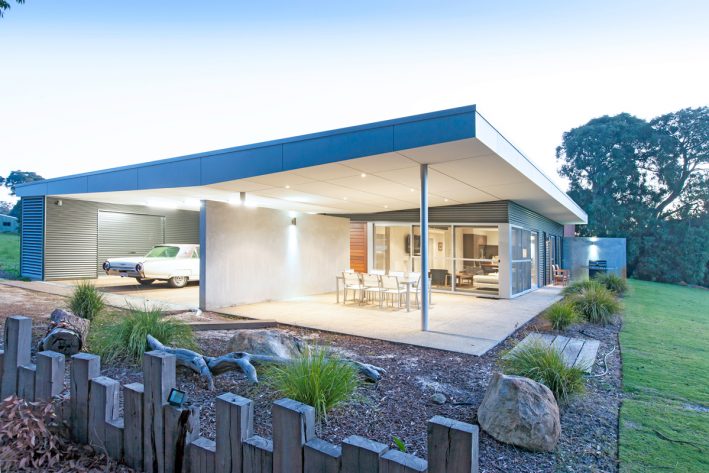
Architecture, at its best, doesn’t just shelter us—it lifts us. Thankyou Marcus for our beautiful home!
My best airbnb experience so far 👍
The house is absolutely stunning.
We can't believe it's ours!
Everyone remarks on how great the spaces are to live in.
The most amazing house
This was a stunning home.
What we like about the house ... in short ‘everything’!!!
Stayed in houses all over the world ... it is by far the best.
Exceptional space.
A MODULAR HOME DESIGN SYSTEM.
mi shack® creates modular home design in WA with an architectural edge.
Our MIDS modular design system helps clients test site, brief, budget, planning logic and construction pathways before a project becomes too expensive to question.
Designed by Marcus Browne RAIA, registered architect in Western Australia, mi shack® creates architect-designed homes, holiday homes and retreats across coastal, rural, metro and regional WA.
From Yallingup, Dunsborough, Wilyabrup and Eagle Bay to Fremantle, Esperance, Injidup, Margaret River and Peppermint Grove Beach, each project adapts the same design system to a different site, family and budget reality.
A little mid-century.
A little minimalist.
A proper design system for real WA sites.
WHY MI SHACK?
mi shack® is a modular integrated home design system created by Marcus Browne RAIA, a registered architect in Western Australia.
Based in the Margaret River Region, mi shack® creates architect-designed homes for coastal, rural, metro and regional sites across WA.
The homes are mid-century-influenced, minimalist and site-specific.
However, the system is not just about style.
It brings together early site due diligence, modular planning, passive-solar thinking, realistic budget guidance and coordinated documentation for planning and building approvals.
As a result, clients get a clearer design pathway from the first sketch through to builder pricing and approvals.
A LITTLE MID-CENTURY. A LITTLE MINIMALIST.
Our vibe is a little bit mid-century modern with a minimalist twist.
mi shack® helped pioneer this modular design approach more than 15 years ago.
Since then, every project has helped the system grow, adapt and improve.
The aim is simple.
Create homes that feel relaxed, useful, beautiful and specific to their place.
Not generic.
Not overworked.
Not a box dropped onto a site.
HOW THE SYSTEM WORKS.
mi shack® uses predefined planning modules to create a home that suits your site, brief and budget.
In practice, the modules can flip, slide and connect in different ways.
They work with a central planning spine, clear living zones and simple structural logic.
Because some layouts, selections and construction methods are considered early, the design process starts with fewer unknowns.
That helps improve cost confidence before the project moves too far.
This is where modular home design WA becomes useful.
It gives the project structure without forcing every client into the same plan.
WHY THAT MATTERS.
Many architect-designed homes struggle to move from concept to construction.
Budgets shift.
Scopes grow.
Approvals take time.
Site constraints can also appear late.
In addition, builder pricing can surprise people.
mi shack® is designed to reduce those risks from the start.
That does not mean every decision is locked in.
Rather, each project starts with a strong design framework.
From there, the home can adapt to the site, client, budget and preferred construction pathway.
EVERY MI SHACK IS STILL UNIQUE.
Each mi shack® starts from the same modular design system.
However, every home is adapted to its own site, client brief, budget and construction pathway.
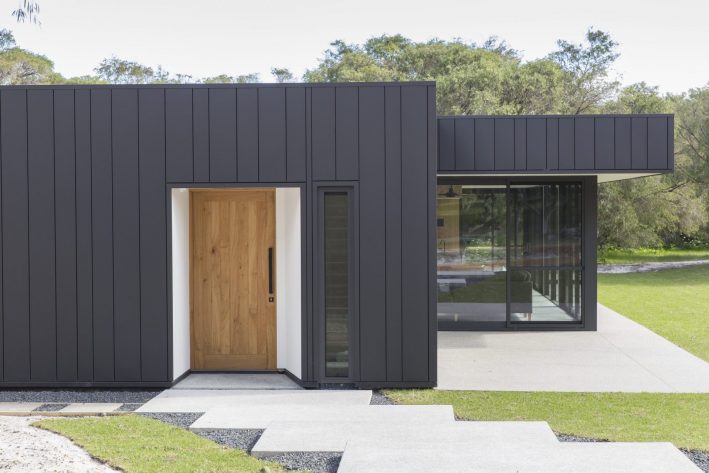
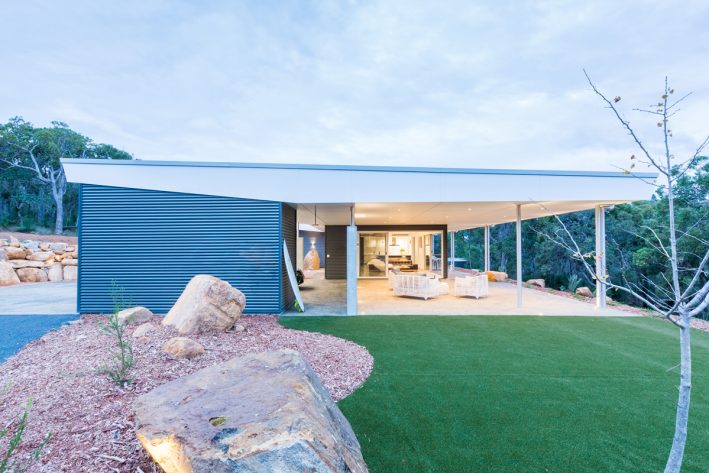
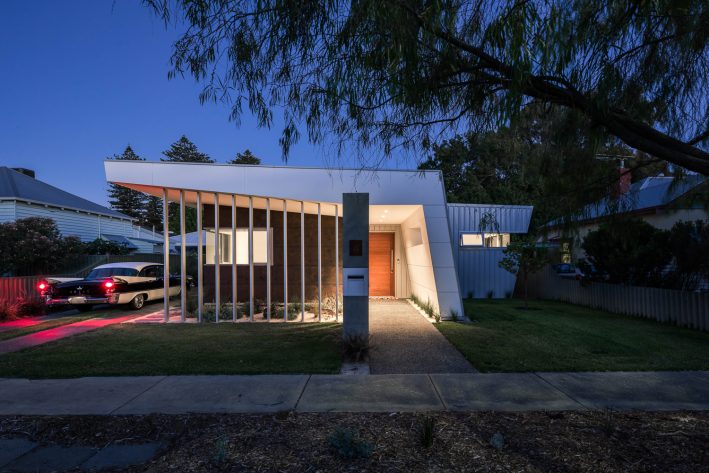
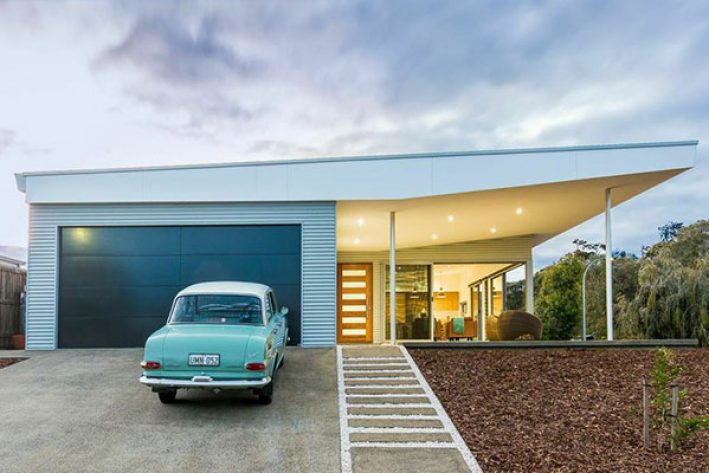
That is why 17 Driftwood Shack, 15 WAMO Shack, 14 Cannon Shack and 04 McGunnigle Shack can all belong to the same design family while feeling completely different.
Some projects are compact.
Others are generous.
Some sit on rural land.
Meanwhile, others respond to coastal exposure, bushfire, slope, metro family life or short-stay guest use.
That flexibility is the point.
A design system should create clarity, not sameness.
MODULAR OR PREFAB?
Modular does not always mean fully prefabricated.
With mi shack®, modular refers first to the design system.
It means a set of adaptable planning modules that can be mixed, matched and adjusted to suit the site, brief, budget and preferred construction method.
A quality local builder can build a mi shack® on site.
Alternatively, the design can be adapted for prefabricated or modular construction where the site, budget and delivery method suit.
Fully prefabricated construction can be a great option for the right project.
However, it is not automatically cheaper or faster.
Lead times, design development, approvals, site access, transport, cranage and services still matter.
Therefore, the strength of the mi shack® system is flexibility.
It can work with conventional construction, partial prefabrication or a fuller prefabricated approach.
Most importantly, it does not force every site or client into one delivery model.
Start with a Shack Map.
The best first step is a Shack Map.
A Shack Map is an early feasibility and concept-planning exercise. It tests your site, layout options, budget range, planning constraints, solar orientation and likely approval pathway before you commit to a full design process.
This is where we Map iT before you Buy iT, design it or build it.
Live. Love. Shack.
MODULAR HOMES SYSTEM.
MIDS = MODULAR INTEGRATED DESIGN SYSTEM.
Map It.
Create your Shack Map!
LEARN MORE
Zone It.
Select your zone layouts.
LEARN MORE
Style It.
Pick your style.
LEARN MORE
Pimp It.
Choose your vibe.
LEARN MORE
SAMPLE MODULAR LAYOUTS.
Sample Shack Maps show how the mi shack® MIDS modular design system can create different layouts from the same family of modules.
Modules can slide, flip and connect along a central planning spine.
Where possible, mi shack® places living zones to the north and sleeping and wet zones to the south.
Together with cross ventilation and suitable glazing, this helps create the conditions for a well-performing passive-solar home.
PROJECTS ACROSS WA.
Explore mi shack® projects across Western Australia.
Each project starts with the same MIDS modular design system.
However, every home is adapted to its own site, client brief, budget and construction pathway.
Some projects are completed homes.
Others are under construction.
A few remain concept studies.
Together, they show how modular home design WA can work across coastal, rural, metro and regional sites.
COASTAL AND REGIONAL PROOF.
Start with 17 Driftwood Shack for harsh coastal design proof.
This Peppermint Grove Beach project responds to BAL-29, salt air, screening, wellness and relaxed beachside living.
For regional WA, 09 Hudson Shack shows how modular thinking can suit a coastal Esperance family home.
Together, these projects show that mi shack® is not limited to one town or one type of site.
YALLINGUP AND SOUTH WEST RETREATS.
For Yallingup projects, explore 15 WAMO Shack, 16 The Dell Shack, 08 Oliver Shack and 01 White Shack.
Each one tells a different South West story.
WAMO is a rural retreat on 100 acres.
The Dell responds to slope, BAL-29 and protected peppermint trees.
Oliver is a family home in a hidden peppermint grove.
White is the original mi shack®.
DUNSBOROUGH AND EAGLE BAY HOMES.
For Dunsborough and Eagle Bay, see 03 Clarke Shack, 12 Eagle Bay Shack and 14 Cannon Shack.
Clarke is a compact family holiday home near Geographe Bay.
Eagle Bay is a generous coastal holiday home above the bay.
Cannon is a primary family home on a rural Dunsborough lot.
As a group, these projects show how the same design system can adapt to very different forms of South West living.
METRO WA PROOF.
For metro WA, 04 McGunnigle Shack shows how the mi shack® system adapts to Fremantle family living.
That matters because modular home design WA should work beyond rural and coastal retreats.
It should also help with compact, clever and site-specific metro homes.
featured oN.
‘A New Century Modern Solution for Lovers of Mid-century Modern’

mi shack® is also sometimes searched as mishack, Mishack or Mi Shack. The system was created by Marcus Browne RAIA, registered architect in Western Australia, based in the Margaret River Region.